
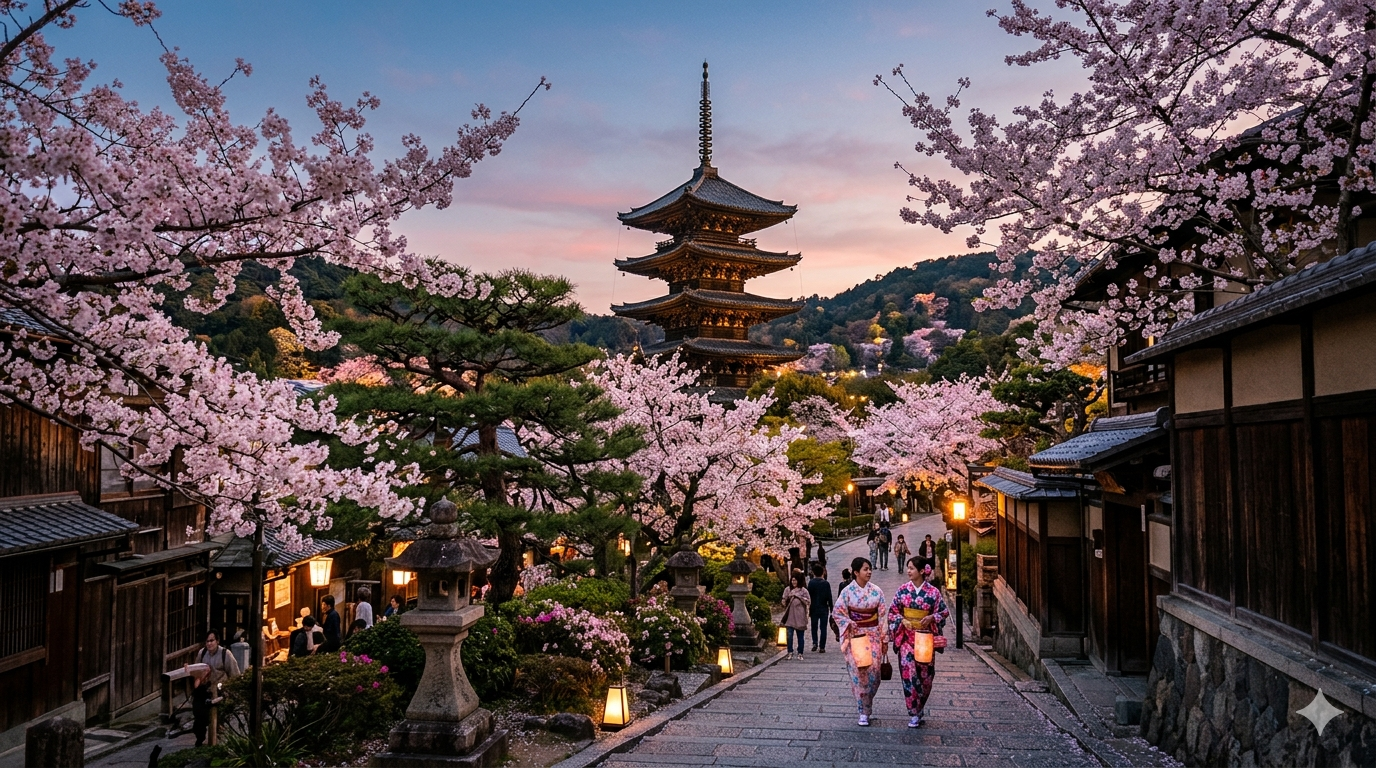
Visiting Kyoto, Japan in spring is one of the most magical ways to experience the country’s cultural heart. As the city shakes off the last whispers of winter, it reveals a stunning transition from the deep pinks of plum blossoms to the ethereal whites of the early cherry blossom season. Whether you are looking for serene temple walks, traditional festivals, or the first glimpse of the Sakura season, Kyoto in March offers an unforgettable blend of ancient heritage and seasonal beauty.
Witness the Transition: From Plum Blossoms to Sakura
While many travelers set their sights exclusively on cherry blossoms, early March visitors are treated to the underrated beauty of Ume (plum blossoms). These flowers are deeper in color and carry a much stronger, sweeter fragrance than their cherry cousins. Kitano Tenmangu Shrine and Jonan-gu Shrine are the premier spots for this early spring spectacle. At Jonan-gu, the “weeping” plum trees create a waterfall of pink petals that is truly a photographer’s dream.
As the month progresses, anticipation builds for the Sakura (cherry blossoms). In Kyoto, the first blooms typically appear around March 23 through 25, with full bloom following roughly a week later. Walking the Philosopher’s Path during the final week of March allows you to see the very beginning of this transformation, as the buds along the canal begin to swell and burst into life. For a truly unique view, visit Kiyomizu-dera during its special spring night illuminations, where the temple and its surrounding trees are bathed in a golden glow against the evening sky.
Timing the Bloom: From First Bud to “Sakura Snow”
A common question for spring travelers is how long this window of beauty actually lasts. The life of a cherry blossom is fleeting but spectacular. Once the “first bloom” is announced, it takes about seven days to reach Mankai (full bloom), which usually occurs right at the turn of the month between March 31 and April 2.
If your travels extend into early April, you are in for a treat. This is when the “Sakura Snow” begins. As the blossoms reach their peak, the petals start to drift onto the canals and temple paths, creating a carpet of pink. While the most common trees begin to fade by April 7 to 10, Kyoto has a few secrets for late-season visitors. Sites like Ninna-ji Temple are famous for the Omuro Sakura, a late-blooming variety that often stays vibrant well into the middle of April. For those arriving later in the month, heading to higher elevations like the mountain village of Kurama can offer a second chance to catch the lingering blossoms before the city turns a lush, vibrant green.
Step Into History with March Festivals and Rituals
March is a month of deep cultural significance in Kyoto, offering several rare opportunities to witness centuries-old traditions. On March 3, the city celebrates Hina Matsuri (Girls’ Day). One of the most beautiful events is the Nagashibina ceremony at Shimogamo Shrine, where participants dressed in ornate Heian-period costumes release paper dolls into the river to pray for health and protection.
Mid-month also brings the Seiryu-e Dragon Festival at Kiyomizu-dera, featuring a massive blue dragon costume paraded through the streets to ward off misfortune. If you prefer a more tranquil experience, look for the “Special Openings of Non-Public Cultural Properties.” Throughout the month, several sub-temples at sites like Daitoku-ji and Kennin-ji open their private Zen gardens and historic gates to the public for a limited time, offering a rare look at hidden treasures usually kept behind closed doors.
Conclusion
A journey to Kyoto in March is an exercise in timing and wonder. By arriving during this shoulder season, you get to experience the city’s most famous landmarks with slightly smaller crowds than the April peak, while still enjoying the vibrant awakening of the Japanese spring. From the sweet scent of plum blossoms to the sacred rituals of ancient shrines, Kyoto remains a place where every street corner tells a story of elegance and renewal.
Travel Tip: Since March weather in Kyoto can fluctuate between crisp sunny days and chilly evenings, we recommend packing light layers and a comfortable pair of walking shoes for exploring the city’s historic stone-paved slopes.