
Table of Contents
Do you need a passport to fly within the U.S.? No. One acceptable ID gets you through TSA, and we break down which ones count in our guide to traveling without a REAL ID. Still, we carry a passport on domestic flights, every time.
The reason is simple. The day the weather turns, a passport can turn one bad routing into a few better options. Here is the trip that taught us that.
When the Weather Shut Down the Midwest
I flew to Boston for work with a colleague years ago, around the year 2000, and were heading home to Spokane.
Then weather cancelled flights through the Midwest, and our way home fell apart.
Neither of us had a passport with us. The way home the airline could offer went Boston to Miami, Miami to Los Angeles, and Los Angeles to Seattle. It was one very long travel day, from early morning until late at night. We spent the night in a hotel in Seattle and flew the last leg, Seattle to Spokane, the next day.
The airline agent told us we could have flown through Canada if we had passports. Instead we zigzagged across the country. That long day is why we carry passports now.
The Moral of the Story: Why We Carry a Passport on Domestic Flights
Here is the lesson in one line: a passport is not required to fly domestic, but it keeps more doors open when plans fall apart. That is why we carry a passport on domestic flights, even on a quick work trip.
When a storm grounds flights across a region, the remaining seats fill fast. Without a passport, you should count on being offered only routings that stay inside the U.S., because flying through another country means meeting its entry rules and U.S. re-entry rules on the way home. With a passport, routings through another country are at least worth asking about, if the airline flies them.
That last part matters, so we will be plain about it. A passport does not entitle you to a reroute, and airlines decide what they offer. What it does is remove one reason the answer has to be no.

Passport Book or Passport Card? It Matters for a Reroute
This is where a lot of travelers get caught out. The U.S. passport comes in two forms, and they do different jobs.
- At TSA, both work. The tsa.gov identification page lists the U.S. passport and the U.S. passport card as acceptable ID for domestic flights (as of 2026-10-31).
- For a flight back into the U.S., the card falls short. U.S. Customs and Border Protection lists a valid U.S. passport, or a Trusted Traveler card such as NEXUS, for U.S. citizens arriving by air. The passport card appears only on its list for land and sea crossings (cbp.gov, last modified June 17, 2026).
- For getting into Canada, plan on the book. The Government of Canada recommends that U.S. citizens always travel with a valid passport, and the alternative documents it lists are for travelers not arriving by air (canada.ca, updated July 31, 2026).
So if your Plan B might cross a border by air, the passport book is the one to pack. It is the version we mean when we say we carry a passport on domestic flights.

Check Your Passport Before You Need It
If you carry a passport on domestic flights, it only helps if it is usable when you need it. A quick check the week before you leave saves a scramble at the counter.

- Look at the expiration date. An expired passport will not get you across a border.
- Check the name. It should match the name on your ticket. If you have changed your name since the passport was issued, sort that out before you rely on it.
- Know what the kids need. TSA does not require ID for children under 18 on domestic flights (tsa.gov, as of 2026-10-31), but any international routing is a different question.
Pack a Small Reroute Kit in Your Carry-On
A reroute only works if you can actually take it, often with little warning and sometimes overnight. This is what we suggest keeping in your carry-on on any domestic trip in storm season:
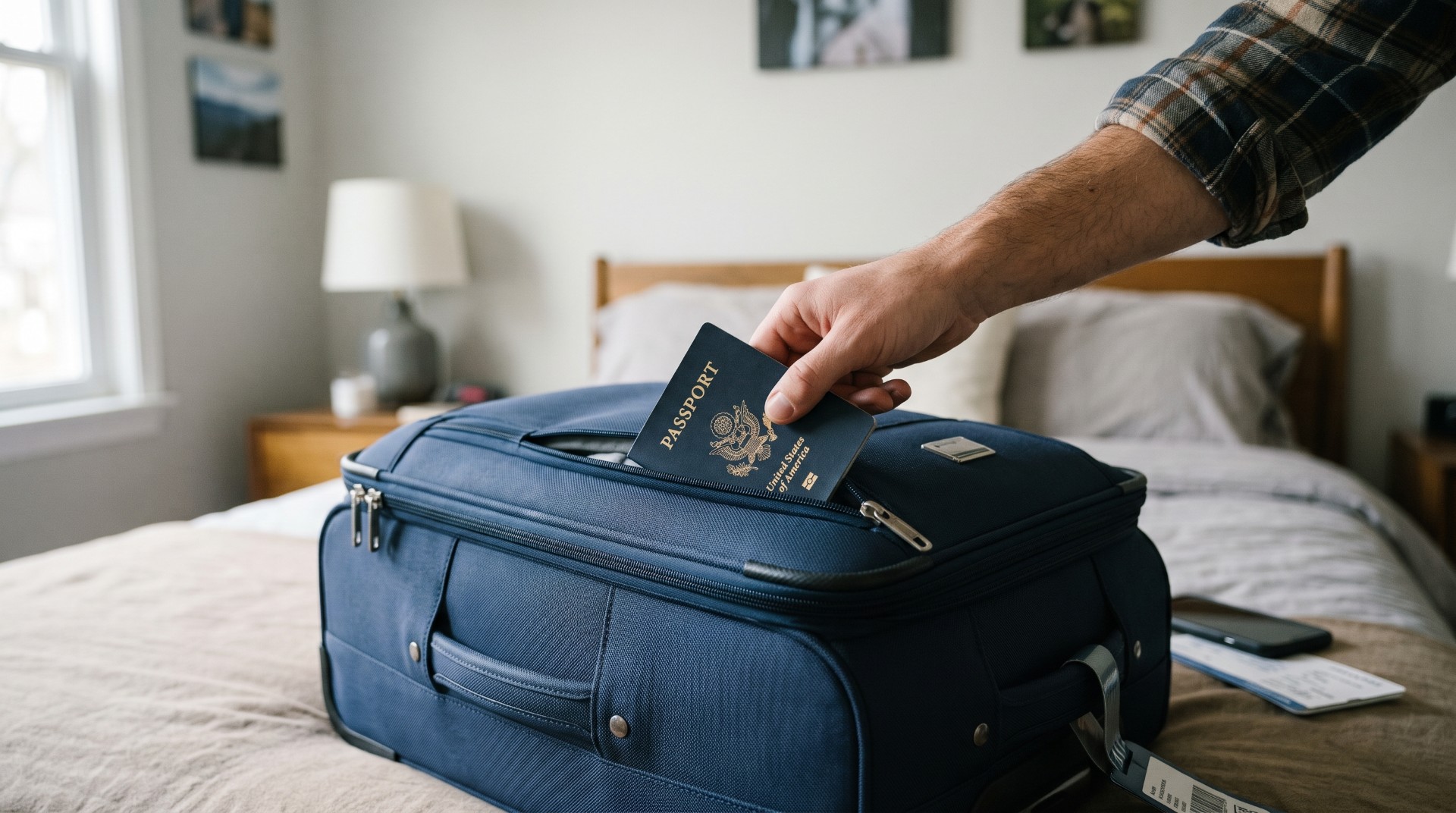
- Your passport book, never in a checked bag. If a reroute happens at the gate, your checked bag will not be there to help.
- Your everyday ID too. Your driver’s license still does the everyday work, and if it is not REAL ID compliant, the passport covers you at TSA anyway.
- A photo of your passport page, stored securely on your phone, apart from the passport itself. It will not replace the real thing, but it helps if the original goes missing.
- Your airline app, logged in, with your confirmation number and frequent flyer number handy. Rebooking options often show up in the app before the counter line moves.
- A phone charger and a power bank, since a long reroute drains a phone fast. Check the power bank rules in our list of surprising items TSA won’t let you carry.
- Medications and one change of clothes, in case an overnight stop like our Seattle hotel turns into a night away from your luggage.
- Your travel advisor’s number and your travel protection policy details, so help is one call away.
What a Travel Advisor Does When Flights Fall Apart
Rebooking in the middle of a storm is stressful for anyone. Lines at the counter get long, hold times climb, and the best remaining seats go to whoever finds them first.

Travel protection is the other half of a good Plan B, since it can help with costs that pile up when a trip unravels. We explain why in travel insurance and why everyone needs it, and you will find more on how we help in our top 10 reasons to use a travel agent. Planning a trip for a group? Our group travel planning page explains how we handle the details.
The next time the departures board turns red, we hope you are the one with options. A passport in your bag is a small thing that can make a long day a lot shorter, and it is why we still carry a passport on domestic flights.
FAQ
Why carry a passport on domestic flights?
You do not need a passport to fly within the U.S., since one acceptable ID such as a REAL ID license is enough at TSA. We carry a passport on domestic flights because it can open up more rebooking options when weather cancels flights, such as routings that connect through another country. Airlines still decide what they offer.
Can a passport help if my flight is cancelled?
It can. A passport lets an airline consider routings that connect through another country, which can matter when every domestic route home is full. It does not guarantee a reroute, and it does not change what the airline owes you. Think of it as one less reason the answer has to be no.
Can I reroute through Canada on a domestic trip?
Possibly, if your airline offers a routing through Canada and you carry the right documents. U.S. Customs and Border Protection lists a valid U.S. passport, or a Trusted Traveler card such as NEXUS, for U.S. citizens returning by air. The Government of Canada recommends U.S. citizens always travel with a valid passport.
Is a passport card enough to reroute through Canada?
Plan on the passport book. TSA accepts the passport card as ID for domestic flights, but U.S. Customs and Border Protection lists the card only for land and sea crossings, not for air arrivals into the U.S. If your backup plan involves a flight across the border, the passport book is the document to pack.
Leave a Reply